Why Is Accounting Important in Business? 5 Honest Reasons
Short answer: why is accounting important in business? Because it is the only reliable way to know whether you are making money, how much tax you owe, and what you can afford to do next. It also produces the statements a lender, buyer or partner will ask to see.
It does not have to be elaborate. A very small business can cover all of that with a separate bank account, a spreadsheet and one honest hour a month.
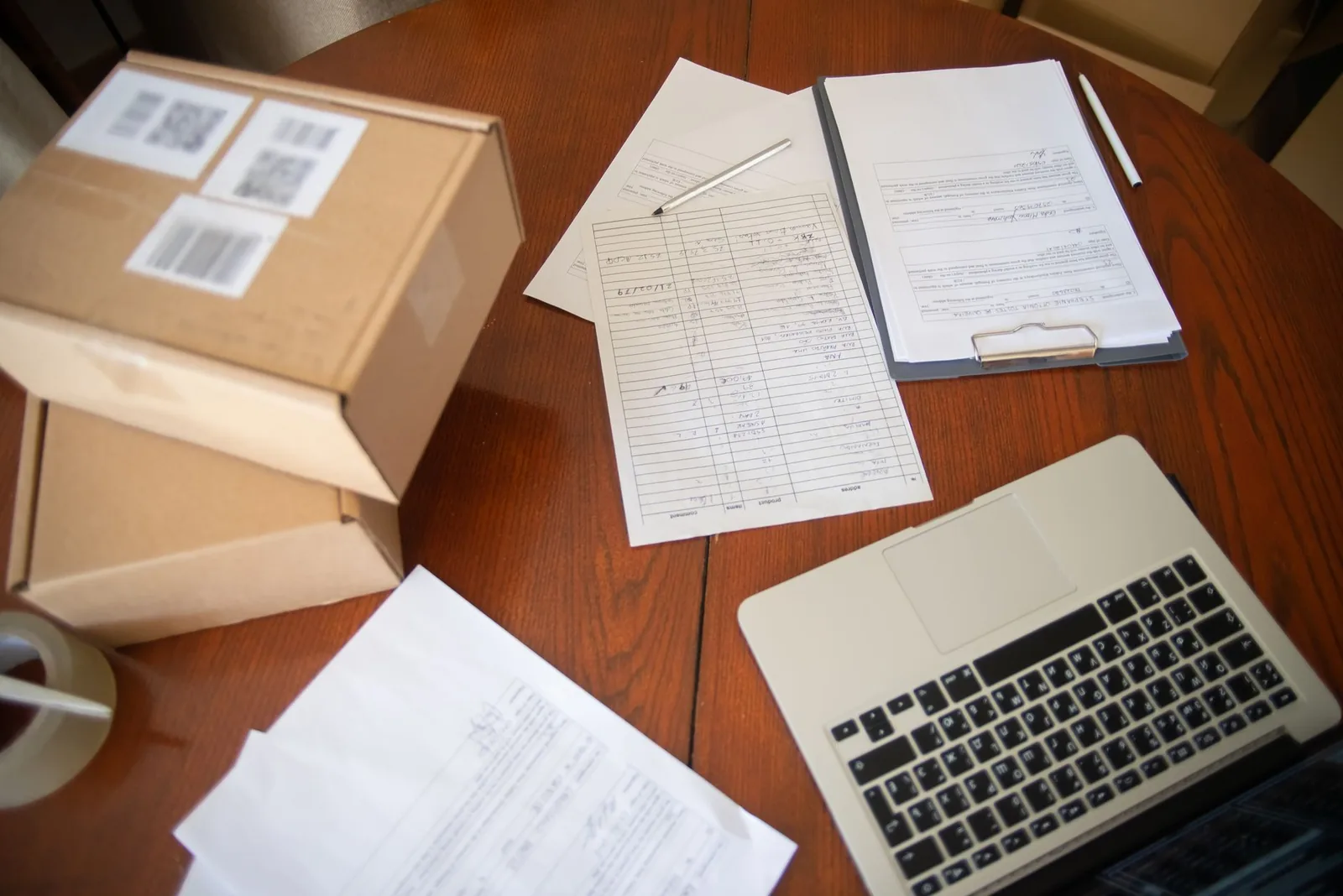
It’s a Tuesday night in early October and Marisol — I’ll call her Marisol — is at a round dining table that stopped being a dining table about a year ago. She sells refurbished film cameras online. There are two taped parcels at her elbow, a clipboard of order sheets, and a laptop showing the best sales month she has ever had: $18,400.
In the other browser tab is her bank account. It is $550 lower than it was on the first of the month.
She refreshes it, in case the bank is still thinking.
Marisol isn’t bad at business. She is flying a plane with most of the instrument panel taped over, and the one dial she can see is the wrong one. Accounting is the rest of the panel. Here is what each dial does, and how few of them you can get away with.
What accounting actually does in a business
Accounting gets called “the language of business,” which is accurate and also a fair summary of why people avoid it. Nobody enjoys being bad at a language in front of their own bank. Strip the vocabulary away and it does three plain jobs.
- 1. It records what happened. Every sale, every cost, every payment in or out, sorted into categories. This layer is bookkeeping, and it is the raw material for everything else.
- 2. It reports the result. The records get summarised into financial statements: an income statement that shows profit over a period, and a balance sheet that shows what the business owns and owes on one day.
- 3. It supports the next decision. What to charge, whether to hire, how much to set aside for tax, whether the loan is affordable. This is where the first two jobs pay for themselves.
The IRS makes much the same list from the other side of the desk. Its small-business guidance says good records will help you monitor the progress of your business, prepare your financial statements, keep track of deductible expenses and support the items reported on your tax returns. Notice that “monitor the progress of your business” comes first, ahead of anything to do with tax.
If the line between job one and jobs two and three is hazy, we drew it properly in bookkeeping versus accounting. The rest of this post is the five reasons those three jobs matter.
It shows whether you are actually making money
Reason one. A business has three different numbers that all get called “how we’re doing.” Revenue is the one you mention at parties. Profit is the one you tell your spouse. Cash is the one your landlord is interested in.
They are rarely the same, and Marisol’s month shows why. These are illustrative figures, but the shape is one we see constantly.
- Revenue: $18,400. Everything she sold. This is the number on the sales dashboard, and the only one she was looking at.
- Profit: $4,850. Take off the $9,900 she originally paid for the cameras she sold, $2,750 in marketplace fees and shipping, and $900 in software and packaging. What is left is what the month earned.
- Cash: down $550. Of that $18,400, $6,300 was still sitting with the marketplace waiting to be paid out, so only $12,100 arrived. Out went the $2,750 and the $900, plus $9,000 for cameras she has not sold yet. $12,100 minus $12,650 is minus $550.
Nothing went wrong in that month. It was a good month. The cash is sitting on a shelf in the form of cameras and in a payout queue, and both will turn back into money. But without the middle number she cannot tell a good month with slow cash from a bad month, and those call for opposite reactions.
Which number your books show first depends on the method you keep them by. We covered both in cash basis accounting and accrual basis accounting, including which one suits a business that holds stock.

It is how you prove your numbers to the IRS
Reason two is the one most people think is the only reason. A tax return is a list of claims, and the IRS puts the job of backing them up on you. It calls this the burden of proof: the responsibility to substantiate the entries, deductions and statements on your return.
“I’m fairly sure it was about that much” is a perfectly normal sentence and not, unfortunately, a filing position. Here is what the records are doing for you.
- They keep your deductions alive. The IRS says you must be able to prove certain elements of an expense to deduct it. A real cost with no record behind it is a deduction you may not get to keep.
- They make quarterly taxes possible. Sole proprietors, partners and S corporation shareholders generally have to make estimated tax payments if they expect to owe $1,000 or more when the return is filed. To work out the payment you have to estimate your income and deductions for the year, which is hard to do from a feeling.
- They keep a mistake from becoming a penalty. The IRS accuracy-related penalty is 20% of an underpayment that comes from negligence or disregard of the rules. Being able to show a reasonable attempt to get it right is the difference between owing the tax and owing the tax plus a fifth.
None of this requires anything fancy. The same IRS page says that, except in a few cases, the law does not require any special kind of records, and that you may choose any system that clearly shows your income and expenses. A shoebox does not clearly show anything. It is a filing system in the way a pile is a filing system.
It turns decisions into arithmetic instead of guesses
Reason three is the one that makes owners money, and the one they hear about last. Most business decisions are a sum wearing a disguise. Gut feel is a fine tool, but it has a suspiciously good memory for the times it was right.
Take the question Marisol has been circling for months: can she afford a part-time helper to pack orders, at about $1,600 a month?
- 1. Find what each dollar of sales leaves behind. On $18,400 of sales, the cameras cost $9,900 and fees and shipping cost $2,750. That leaves $5,750, or about 31 cents of every dollar sold, to cover everything else.
- 2. Divide the new cost by that figure. $1,600 divided by 0.31 is roughly $5,100. That is the extra monthly sales the helper has to make possible just to pay for themselves.
- 3. Ask whether that is believable. If packing is what stops her listing more cameras, an extra $5,100 a month on an $18,400 base is plausible. If orders are already going out on time, it is not, and the answer is no.
Three lines of arithmetic, and the question has gone from “I don’t know, it feels like a lot” to a number she can test. The same sum works for a price increase, a second van, a bigger unit or a slow product line. But it only works if step one exists, and step one is an income statement.
The SBA puts this under the plain heading of managing your finances: weighing the benefits of a decision against its costs over time. You cannot weigh something you have not measured.
It is what lenders, buyers and partners ask to see
Reasons four and five are about other people. Sooner or later someone outside the business needs to understand it without taking your word for it, and a bank will not accept a screenshot of a sales dashboard and a confident expression.
- Reason four: borrowing. Expect a lender or a landlord to ask for financial statements and tax returns covering more than one year. The SBA describes the balance sheet as a snapshot of your business financials, and a snapshot is exactly what an outsider wants: what you own, what you owe, on a stated date.
- Reason five: selling, or bringing someone in. A buyer or a new partner prices the business from its records. Profit you cannot document is profit they will not pay for. The value of years of work can come down to whether the numbers were kept as you went or reconstructed the month before.
- And the quiet version: you, in two years. You are also an outsider to the business you ran in an earlier year. Was last autumn really this slow? Did shipping always cost this much? Memory will give you an answer either way. The books will give you the right one.
This is where the “language of business” line earns its keep. Revenue, profit, assets and liabilities mean the same thing on every set of statements, so a stranger can read yours in ten minutes. It is the one language where being fluent mostly means being consistent.

How much accounting a small business actually needs
An accounting firm publishing two thousand words on why accounting matters is about as surprising as a barber recommending a haircut. So here is the part a barber would leave out: a lot of small businesses need far less of it than they fear, and can do it themselves.
If you are a one-person business with a few dozen transactions a month and no stock or staff, this is the whole system.
- A separate bank account. IRS Publication 583 says one of the first things to do when you start a business is open a business checking account, and to keep it separate from your personal one. This single step does more than any software.
- A list of money in and money out. A spreadsheet is fine. Date, amount, who, and what it was for. The same publication describes a single-entry system as the simplest to maintain, and it is allowed.
- A monthly reconciliation. Publication 583 says you should reconcile your checking account each month. In practice that is one hour with the bank statement and your list, making sure they agree.
- Somewhere the receipts live. A folder of phone photos counts. Keep them as long as you might need to prove the return they support.
That costs nothing, and for plenty of businesses it is enough for years. Our plans start at $299 a month, which is $3,588 a year. If the business clears a few thousand dollars, paying that would be accounting advice so bad it should be reported to someone.
The picture changes when you hold stock, have employees, collect sales tax in more than one state, or find the monthly hour has become a monthly weekend. Our post on whether you actually need an accountant lists the signs. If you are past them, the services page shows what we take off your plate and the pricing page shows what it costs, in writing. And if the only thing you want off your plate is the annual return, we priced that question separately in how much it costs to do your taxes.
What it costs to run a business without it
The cost of having no accounting rarely arrives as a bill. It arrives as a decision you made slightly wrong, over and over, with nothing to tell you so.
Go back to the 31 cents. Suppose Marisol believes, from memory, that she keeps about 35 cents of every dollar, and prices and spends as though she does. On $200,000 of sales in a year, that four-cent gap is $8,000 she planned around and never had. Nobody took it. It was never there.
Then the visible costs, which are smaller. An illustrative $4,000 underpayment put down to negligence carries a 20% penalty: $800, on top of the tax and the interest. A deduction with no record behind it is simply gone. A loan application that needs three years of statements by Friday becomes a very expensive week.
And the one that does not show up in dollars at all: the Tuesday night at the table, refreshing a bank balance, not knowing whether to be pleased or worried. The plane is flying fine. She just cannot see the panel.
Frequently asked questions
- Why is accounting important in business?
- Accounting is important in business because it is the only reliable way to know whether the business is making money, how much tax it owes, and what it can afford to do next. It also produces the financial statements that lenders, buyers and partners ask for. Without it, an owner is deciding from the bank balance and memory.
- What are the main purposes of accounting?
- There are three. Accounting records what happened, by capturing every sale, cost and payment. It reports the result, as financial statements such as the income statement and balance sheet. And it supports decisions and compliance, including pricing, hiring, borrowing and filing accurate tax returns.
- Why is accounting called the language of business?
- Because it is the shared format that owners, lenders, investors and tax authorities all use to describe a business. Terms such as revenue, profit, assets and liabilities mean the same thing on every set of financial statements. That lets someone outside the business read its results without being told the story.
- Does a small business really need accounting?
- Every business needs records, but not every business needs an accountant. The IRS says you may choose any recordkeeping system suited to your business that clearly shows your income and expenses. A very small business can meet that with a separate bank account, a spreadsheet and a monthly reconciliation.
- What is the difference between bookkeeping and accounting?
- Bookkeeping is recording and categorising the transactions. Accounting is interpreting those records, producing financial statements, planning for tax and filing returns. Bookkeeping is the raw material and accounting is what gets built from it.
- When is the best time to reconcile your bank account?
- Once a month, as soon as the statement is available. IRS Publication 583 says you should reconcile your checking account each month, so that your books reflect all bank charges and the correct balance. Monthly is also frequent enough to catch a duplicate charge or a missing deposit while you still remember it.
- How long should a business keep its records?
- The IRS says to keep records as long as needed to prove the income or deductions on a tax return. For most returns that means at least three years from filing, and longer in some situations. If you have employees, keep employment tax records for at least four years after the tax is due or paid, whichever is later.
- What happens if a business does not keep proper records?
- The owner carries the burden of proof for what is on the tax return, so a deduction that cannot be supported can be disallowed. If an underpayment of tax is due to negligence or disregard of the rules, the IRS accuracy-related penalty is 20% of that underpayment. The business also loses the ability to see its own profit, which usually costs more than the penalty.
Marisol is a composite and her figures are illustrative. The IRS thresholds and penalty rate quoted above were checked against the linked IRS pages on October 6, 2026, and they do change, so confirm them at the source before relying on a number from a blog post — including this one.
More plain-English answers.
- Blog
Bookkeeping vs. Accounting: What’s the Difference?
A bookkeeper records the numbers; an accountant interprets them and files your taxes. Where the line falls and what each costs.
Read more - Blog
Do you actually need an accountant for your small business?
The signs that software and a spreadsheet have stopped being enough, and the cases where they still are.
Read more - Services
What we take off your plate
Monthly bookkeeping, financial statements you can read, and the annual return, in one flat fee.
Read more
Want the tape off the instrument panel?
Book a free 15-minute discovery call with Njock. No pitch. We just listen, look at what you have, and tell you honestly whether we’re a fit.
Prefer to read on your own? More posts from the blog.